How the calories burned calculator works
Pick what you did, tell us for how long, and we turn it into calories using published MET values.
- 1 Pick your activity
Walking, running, cycling, swimming, lifting, or rowing.
- 2 Set time, weight, and effort
Your body weight and intensity change the number more than you'd think.
- 3 Get your burn
A clean calorie estimate you can actually plan around.
Calories burned in 30 minutes
What half an hour is really worth — for a 70 kg (154 lb) person, at three effort levels. Tap any number to load it in the calculator.
| Activity | Light | Moderate | Vigorous |
|---|---|---|---|
| Walking | |||
| Running | |||
| Cycling | |||
| Swimming | |||
| Lifting | |||
| Rowing |
MET-based estimates. Your exact burn depends on pace, fitness, and conditions.
Why it varies
Same 30 minutes. Very different number.
- Body weight scales everything. A heavier body burns more calories doing the exact same workout.
- Effort is the multiplier. Going from an easy pace to a vigorous one can nearly double your burn.
- Consistency beats intensity. The workout you repeat every week burns more than the perfect one you do twice.
Beyond one workout
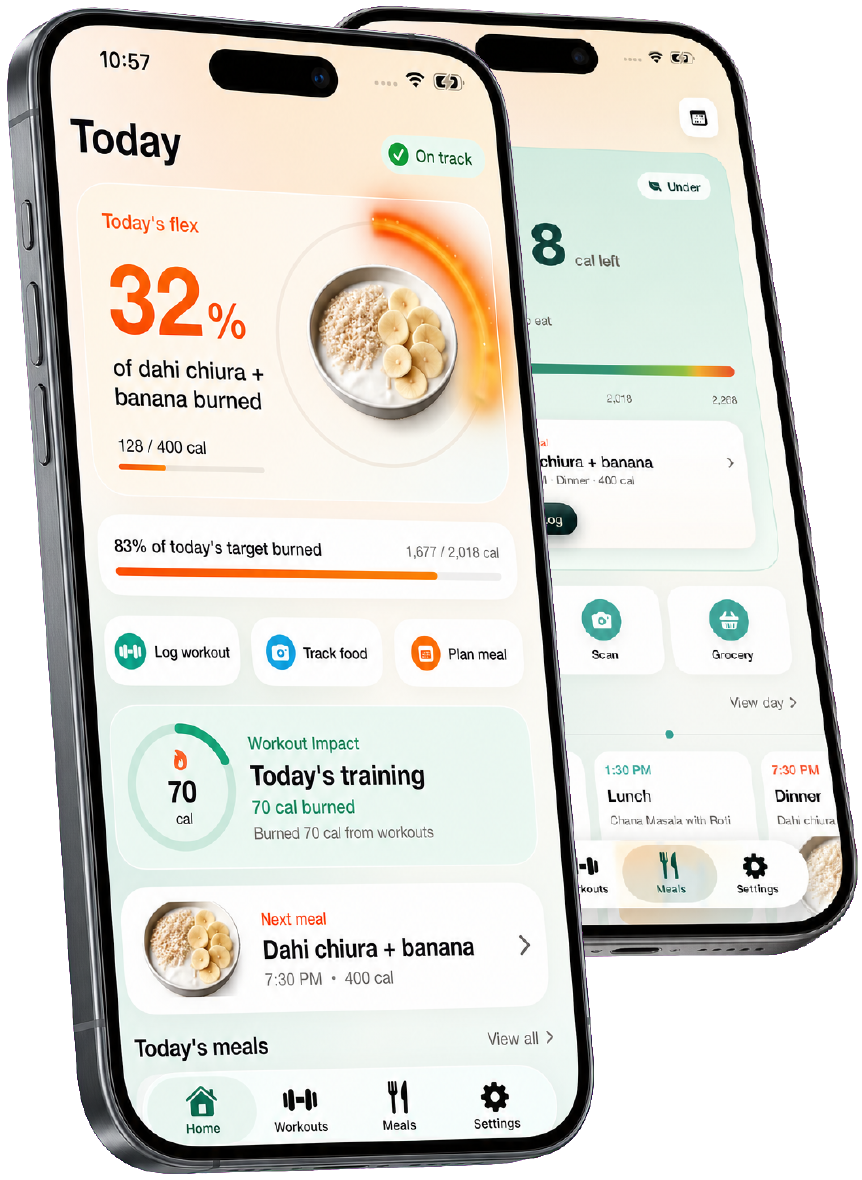
This is one workout. Burnplate adds up your whole day.
You get one number here. In the app, every workout you log meets every meal you eat — so you always know where the day stands.
Point your camera at the plate — calories logged.
Sets, cardio, or quick sessions. Burn is automatic.
Meals in, movement out — one clear balance.

Common questions
Frequently asked questions
How many calories does 30 minutes of walking burn?
At a brisk pace, most people burn roughly 130–200 calories in 30 minutes — about 158 for a 70 kg (154 lb) person. Bigger bodies and faster paces burn more. Use the calculator above with your own weight for a closer number.
What burns more calories — running or cycling?
Minute for minute, running usually wins: around 9.8 METs at a steady 6 mph versus about 7.5 METs for a brisk ride. But cycling is easier on the joints and easier to sustain, so over a full hour the gap often closes.
Does lifting weights burn calories?
Yes — a typical session burns about 130–220 calories per half hour, less than steady cardio. The catch: lifting builds muscle, which nudges up what you burn at rest, and hard sessions keep burning a little extra for hours afterward.
How accurate is a calories burned calculator?
Good enough to plan with, not lab-grade. This one uses MET values from the Compendium of Physical Activities — the same reference most fitness trackers rely on. Real-world burn still varies around ±10–20% with fitness level, technique, and conditions.
How many calories should a workout burn?
There's no magic number. 200–400 calories per session is a common, sustainable range for most people — but frequency beats size. Three 250-calorie workouts a week outdo one heroic 700-calorie session you dread.
Do I burn calories when I'm not exercising?
Constantly — most of your daily burn happens at rest. That baseline (your BMR plus everyday movement) usually dwarfs workout calories. Our TDEE calculator estimates your full day, not just the workout.
How can I burn more calories in the same amount of time?
Raise the intensity: add hills or intervals, quicken your pace, shorten the rests between sets. Going from a light to a vigorous effort can nearly double the burn — flip the intensity setting above and watch your own numbers move.
More free tools
