How the steps to calories converter works
Your steps become minutes of walking at your pace, and minutes become calories using published MET values.
- 1 Set your steps
Drag the slider to any count — today's total or a target.
- 2 Add weight and pace
The two things that change the number most.
- 3 Get the full picture
Calories, distance, and time — instantly.
What common step counts burn
Calories for a 70 kg (154 lb) person at three walking paces. Tap any number to load it in the converter.
| Steps | Easy | Brisk | Fast |
|---|---|---|---|
| 2,500 | |||
| 5,000 | |||
| 7,500 | |||
| 10,000 | |||
| 12,500 | |||
| 15,000 | |||
| 20,000 |
MET-based estimates. Stride, terrain, and fitness shift real-world numbers.
Why it varies
10,000 steps isn't one number.
- Body weight scales the burn. The same 10,000 steps cost a heavier body noticeably more energy.
- Pace changes the rate. Brisk walking burns about 40% more per minute than an easy stroll.
- Every step counts. Errand steps and workout steps burn the same — your day's total is what matters.
Beyond today's steps
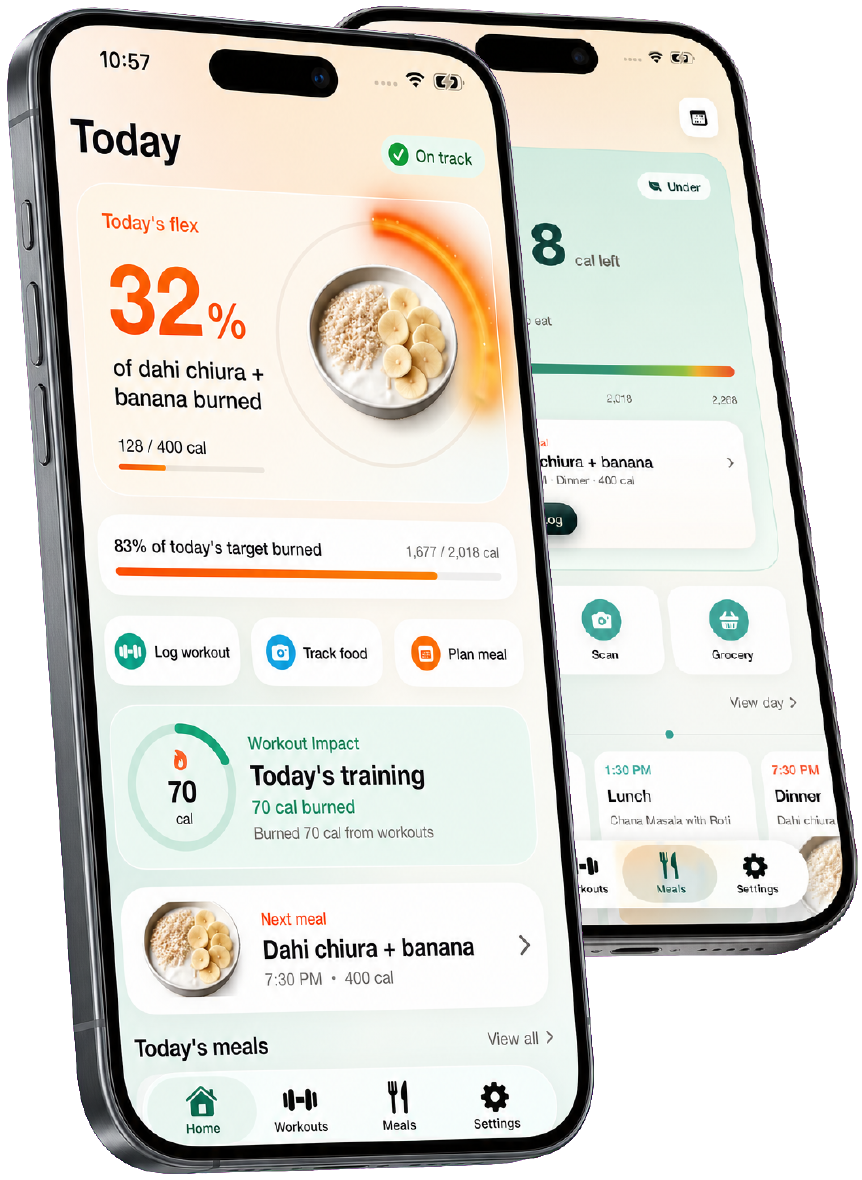
Steps are a start. Burnplate is the full picture.
Steps tell you how much you moved. Burnplate connects that movement to what you ate — so the whole day adds up to one number you can act on.
Point your camera at the plate — calories logged.
Sets, cardio, or quick sessions. Burn is automatic.
Meals in, movement out — one clear balance.

Common questions
Frequently asked questions
How many calories do 10,000 steps burn?
Roughly 300–500 calories for most adults — about 440 for a 70 kg (154 lb) person at a brisk pace. Body weight and pace move the number more than anything else. Set both above for an estimate matched to you.
How many steps does it take to burn 500 calories?
At a brisk pace, a 70 kg person needs roughly 11,000–12,000 steps to burn 500 calories. A heavier person needs fewer, a lighter person more. As a rule of thumb, most people burn 30–55 calories per 1,000 steps.
How many steps are in a mile?
About 2,000–2,500 steps, depending on your stride length. Taller people and faster walkers take fewer, longer steps. One kilometre is roughly 1,250–1,550 steps.
Do steps count if I'm not exercising?
Absolutely. Everyday movement — errands, housework, pacing on calls — is a real part of your daily burn (researchers call it NEAT). For many people it adds up to more than their workouts do.
Is 10,000 steps a day actually necessary?
No — the number started as a 1960s marketing slogan for a Japanese pedometer, not science. Research shows health benefits climb steeply up to about 7,000–8,000 steps a day and level off after that. 10,000 is a fine target, just not a magic one.
How accurate is a steps-to-calories estimate?
It's a solid planning estimate, not a measurement. Your tracker's step count, your stride, terrain, and fitness level all add wiggle room — expect real-world numbers to vary by roughly ±15%. It's most useful for comparing days, not auditing them.
Does walking fast burn a lot more calories than walking slow?
Per minute, yes — a fast pace burns nearly twice what an easy stroll does. Per step, the totals end up closer than you'd think, because faster walking also finishes the same steps in fewer minutes. The honest win of pace is time saved, plus a stronger heart-rate stimulus.
More free tools
